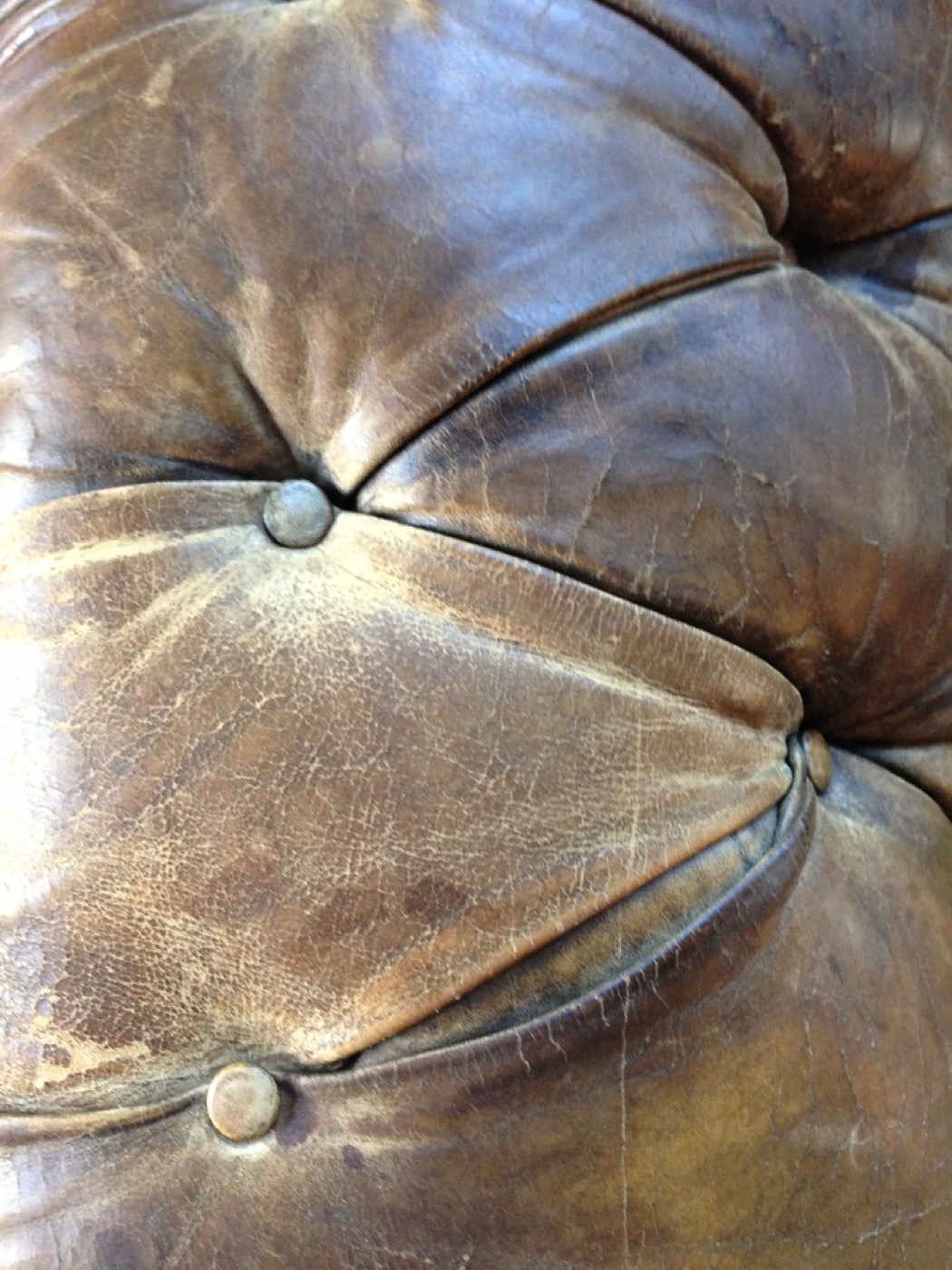
Why does leather on a sofa crack over time
Natural leather contains natural oils and fats that keep the fibers flexible and joined together. With daily use, exposure to the heat of the heating system, direct sunlight and body sweat (slightly acidic and with salts), these oils are gradually removed. When the leather loses its moisture, the fibers become rigid and with repeated movements — sitting, standing up, leaning — microcracks appear that over time become visible and permanent cracks.
Cleaning alone accelerates this process if not accompanied by reconditioning, because any detergent also removes part of the natural oils in the leather. That's why the rule is always: clean and condition. Never one without the other on leather.
Regular cleaning of the leather sofa
For weekly or biweekly maintenance and regular dirt stains:
- Wipe a dry microfiber cloth over the entire surface to remove dust. Dust has abrasive particles that, over time, wear down the leather finish.
- Dampen another microfiber cloth slightly with distilled water or warm water and wipe the entire surface evenly. Distilled water prevents limescale deposits from tap water that can leave white stains on dark leather.
- Apply a specific leather cleaner (Leather Master Clean, Collonil Cuero, Sonax Leather Care) in small amounts with a cloth. Work in sections of 30 x 30 cm with gentle circular motions.
- Remove the cleaner residue with a clean, dry cloth.
- Apply the conditioner: spread a thin layer over the entire surface and let it absorb for 10-15 minutes. Remove the excess with a clean cloth.
Every time you clean leather, you remove part of its natural oils. If you don't replenish that moisturizing with conditioner after each cleaning, you're accelerating the deterioration. In daily-use sofas in heated environments, condition every 3 months at a minimum.
Specific stains: how to act
Grease and oil: Absorb the excess immediately with paper towel. Apply cornstarch over the rest of the stain, let it sit for 20 minutes, and remove with a soft cloth. Clean with the usual method. Water directly on grease only spreads it without removing it.
Ink from a ballpoint pen: Apply a little isopropyl alcohol at 70% with a cotton swab, dabbing over the ink without spreading it. Ink from a ballpoint pen partially dissolves with alcohol. Work in a targeted manner. Condition the area well afterward because alcohol intensely dries the leather.
Drinks (wine, coffee, soft drinks): Absorb immediately. Apply cold water with a slightly damp cloth. If staining remains, use a specific leather cleaner. Condition afterward. Acting within the first 5 minutes generally completely removes these stains on well-finished leather.
Accumulated dirt on armrests and backrests: This dense accumulation of sweat and dirt requires a stronger leather cleaner. Products like Leather Expert or Chemical Guys Leather Cleaner work well for accumulated dirt. Work on small areas with a slightly damp cloth and avoid over-wetting.
Tips for maintaining leather sofas
- Always use a microfiber cloth for cleaning to avoid scratching the surface.
- Keep the room temperature moderate to avoid excessive drying of the leather.
- Use a leather conditioner that is specifically formulated for your type of leather (aniline, semi-aniline, or pigmented).
- Place a protective cover or throw over the sofa when not in use to reduce direct exposure to sunlight and spills.
- Test any new cleaning product on a small, inconspicuous area first to ensure it doesn’t damage the leather.
Frequently asked questions
Can I use household cleaners on leather? No, household cleaners often contain harsh chemicals that can strip the natural oils from leather and cause it to dry out. Always use a leather-specific cleaner to avoid damaging the surface.
How often should I condition my leather sofa? It depends on the usage and environment, but as a general rule, condition your leather sofa every 3 months. If the sofa is in a high-traffic area or exposed to heat, you may need to condition it more frequently.
Can I use a hairdryer to dry the leather after cleaning? No, using a hairdryer can cause the leather to dry out and crack. Always allow the leather to air dry naturally after cleaning and conditioning.
What should I do if I spill something on my leather sofa? Act quickly by blotting the spill with a clean cloth. Avoid rubbing, as this can spread the stain. Then, use a leather cleaner or a damp cloth to gently remove the stain. Always follow up with conditioning to restore moisture.
Is it safe to use Vanish or Cif on leather? No, Vanish and Cif are designed for fabric and may contain ingredients that can damage leather. These products can strip the natural oils and cause the leather to dry out. Always use a leather-specific cleaner instead.
Can I buy a leather conditioner online? Yes, you can find a variety of leather conditioners on Amazon, including products like Leather Honey, Lexol Leather Conditioner, and Bickmore Leather Conditioner. Make sure to choose a conditioner that is suitable for your type of leather.