Penedesenca: the Catalan breed in danger of extinction that lays very dark eggs
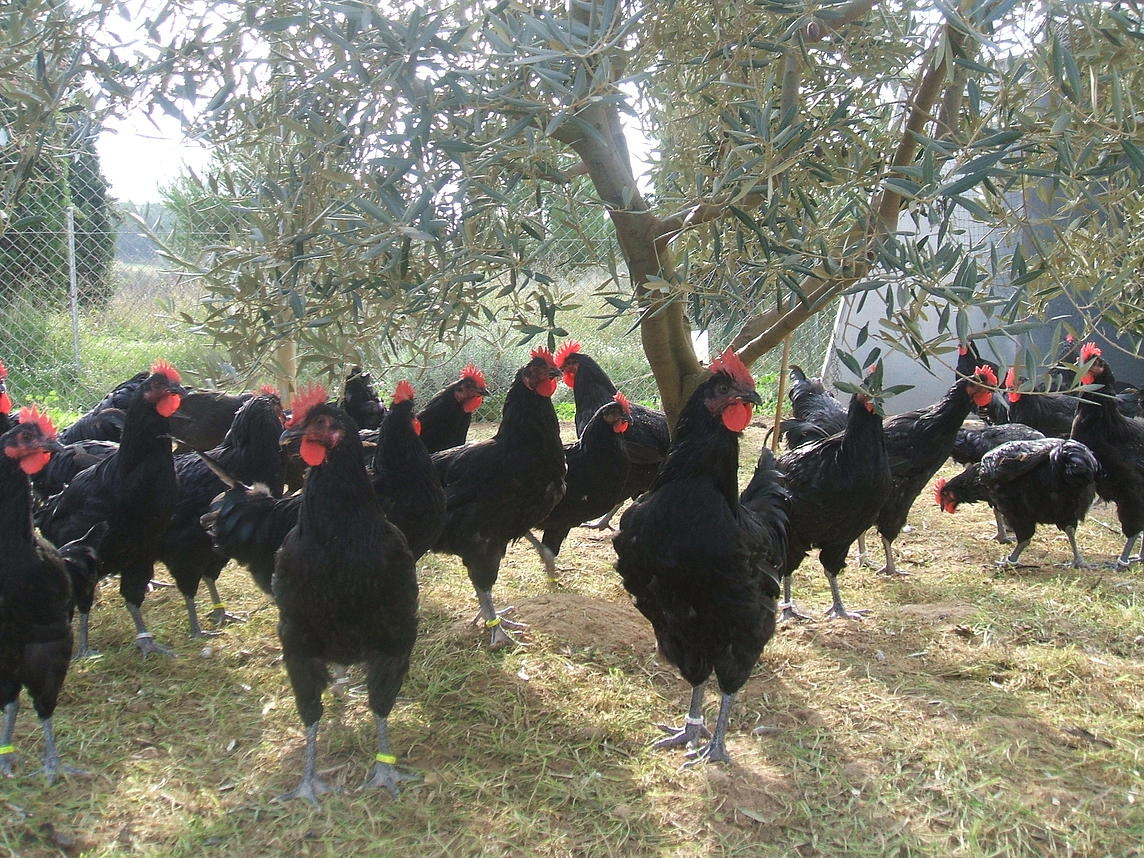
A breed that defines a territory
The Penedesenca is an autochthonous Catalan breed that developed over the 19th century through the gradual selection of local birds adapted to the dry Mediterranean climate of the Penedès region, which spans parts of the provinces of Barcelona and Tarragona. The breed takes its name from the comarca, and for generations it was the quintessential chicken of the Catalan masia — the traditional farmhouse at the heart of Catalan agricultural culture. Its development was not the result of formal breeding programmes but of practical selection by farmers who kept the birds that performed well locally and were suited to the local landscape, feed sources, and climate.
Unlike breeds developed in Britain or the United States through documented programmes by identifiable breeders, the Penedesenca emerged organically from a specific landscape and agricultural tradition. This gives it a different kind of heritage — one tied to place, culture, and centuries of practical farming — that makes it valuable not only as a productive animal but as a living artefact of Catalan rural history. The breed was widely kept in the Penedès until the mid-20th century, when the arrival of commercial hybrid hens offering far higher egg numbers in less space effectively ended its use in commercial farming and left it on the verge of extinction.
The carnation crest: a completely unique characteristic
The Penedesenca is immediately distinguishable from any other breed by its extraordinary crest, known in Catalan as cresta en clavell — literally a carnation crest. This is a large, wide, flat crest with deeply serrated edges that sits broadly across the top of the head, resembling the flower of a carnation in its overall shape. No other breed in the world has a crest of this precise type. While other breeds have various distinctive comb forms — the rose comb of the Wyandotte, the pea comb of the Ameraucana, the single comb of most common breeds — the carnation crest of the Penedesenca is genuinely unique in world poultry genetics.
The crest's low profile and flat spread across the head make it resistant to frost damage, which gives the breed a practical advantage in cold winter conditions despite its Mediterranean origins. The carnation crest varies somewhat between individuals and lines, and maintaining it correctly is one of the selection priorities of active Penedesenca breeders. Cocks of the breed have a particularly impressive crest, and in show contexts this characteristic is one of the primary evaluation criteria. For anyone who keeps the breed, the crest becomes one of the most distinctive and memorable features of an already unusual bird.
Dark eggs comparable to the Marans
The Penedesenca is one of only a handful of breeds in the world that lays eggs as dark as those of the Marans. The shell colour ranges from a rich reddish-brown to a very dark chocolate brown — the intensity varies between individual hens and between lines, but the breed's best representatives produce eggs whose depth of colour rivals or matches that of the most prized Marans lines. In Catalan agricultural tradition, dark eggs were historically associated with higher quality and commanded a premium in local markets, and this consumer preference was one of the selective pressures that maintained the dark egg trait in the breed over generations.
Annual production falls between 150 and 180 eggs per year — a modest figure by modern standards, but one that reflects the breed's traditional dual-purpose nature rather than single-minded selection for laying output. The eggs are medium in size and internally of good quality. For those selling eggs directly to consumers or supplying restaurants interested in local, heritage products, the combination of very dark shells and authenticated regional provenance creates a compelling premium product. A basket of Penedesenca eggs alongside Araucana or Easter Egger blue and green eggs presents a remarkable visual contrast that demonstrates the full range of natural eggshell colour.
Conservation status and the effort to save the breed
The situation facing the Penedesenca is serious. When commercial hybrids displaced traditional breeds throughout Spain in the 1960s and 1970s, the Penedesenca nearly disappeared entirely. By the early 1980s, only a small number of birds remained in scattered farm holdings, and the breed's continued existence was far from guaranteed. Conservation efforts began through the IRTA (Institut de Recerca i Tecnologia Agroalimentàries) in collaboration with private breeders who recognised the genetic and cultural value of what was being lost. These efforts stabilised the population and prevented the breed's extinction, but the Penedesenca remains listed as endangered by the Catalan government and the overall population is still vulnerable.
The conservation challenge is compounded by the breed's small population and the limited number of actively maintained breeding lines. Inbreeding is a real concern in any population this small, and breeders working with the Penedesenca must manage their breeding programmes carefully to maintain genetic diversity while also selecting for the breed's defining characteristics. For anyone interested in actively keeping the Penedesenca, connecting with recognised breeding associations and conservation programmes is strongly recommended — not just to source birds from quality lines, but to contribute to the collective effort to maintain the breed at viable population levels.
Why keep a Penedesenca
Keeping Penedesenca chickens is a meaningful act of conservation as well as a practical farming decision. Every flock maintained in good condition and every breeder who sells quality birds from documented lines contributes directly to the survival of a breed that is genuinely at risk of disappearing. Beyond the conservation argument, the Penedesenca is a genuinely practical farm bird in the right environment: it is highly adapted to dry Mediterranean conditions, resistant to common diseases in its native climate, an excellent forager, and very economical in feed consumption relative to its egg output. It is also a visually striking bird with a personality that experienced keepers describe as alert and active rather than docile or passive.
The Penedesenca is best suited to keepers in Catalonia and other Mediterranean regions of Spain who have access to breeders maintaining quality lines and who are interested in the cultural and agricultural heritage dimension of what they are keeping. It is also appropriate for those who want a dark-egg breed with a native Spanish pedigree rather than importing the genetics of the French Marans. For those interested in markets that value origin, distinctiveness, and conservation connection, the Penedesenca's story is one of the most compelling in Spanish poultry.
Key tips for keeping Penedesenca chickens
- Source birds from breeders registered with recognised conservation programmes or breed associations — breed quality and genetic diversity both matter more in this breed than in most others.
- Provide generous outdoor space: the breed is an active forager that shows stress in tight confinement and performs best in environments that mirror its native Mediterranean landscape.
- Dark egg colour intensity varies between individual hens and tends to be most vivid at the start of each laying cycle, fading slightly as the cycle progresses — this is normal and not a management problem.
- Participate in Penedesenca breeding networks if possible — sharing breeding records, exchanging birds between lines, and maintaining genetic records are essential for a population this small.
- The breed is well adapted to Mediterranean summers and requires little special management in heat, but ensure adequate shade and fresh water during the hottest weeks.
- Document your flock's production and egg colour records — this information is genuinely valuable to conservation programmes trying to assess the breed's overall status and variation.