New Hampshire: the breed that matures quickly and produces well in any climate
The New Hampshire's origin: refining the Rhode Island Red
The New Hampshire is not a cross between distinct breeds but rather the result of selective pressure applied within a single genetic line. Beginning in the 1910s and continuing through the 1920s, poultry farmers in the state of New Hampshire began selecting the fastest-maturing, most productive Rhode Island Reds from their flocks — specifically those that laid earlier in the year, maintained better production during the cold winter months, and reached commercial weight faster than average. Over two to three decades of sustained selection, these birds diverged from the parent Rhode Island Red type enough to be recognised as a separate breed. The New Hampshire was accepted by the American Poultry Association in 1935.
The key differences from the Rhode Island Red reflect the selection priorities of its New England origins. The New Hampshire's plumage is a slightly lighter, brighter russet-orange rather than the deep dark mahogany red of the Rhode Island Red. Its body type tends to be somewhat deeper and broader in proportion — a reflection of the improved meat development that was part of its original dual-purpose purpose alongside improved winter laying. The comb is a medium single comb of similar size to the Rhode Island Red, which means some frost sensitivity in severe winter conditions but acceptable performance in the relatively mild winters of most of Spain.
Earlier maturation and production figures
The most practically significant advantage the New Hampshire holds over the Rhode Island Red is its earlier onset of laying. New Hampshire pullets typically begin laying at 18–20 weeks of age, compared to 20–24 weeks or more for many Rhode Island Red lines. The difference of two to four weeks may sound minor, but for keepers who purchase pullets or hatch chicks in late summer to have laying birds for winter, those extra weeks of production can represent dozens of additional eggs before the shorter daylight hours of autumn begin to affect output.
Annual production falls between 200 and 240 brown eggs per year — a range that places the New Hampshire solidly in the dual-purpose category, producing meaningfully less than commercial hybrids but maintaining solid, consistent output over a longer productive lifespan. Its winter production is particularly notable: one of the explicit selection criteria in the breed's development was maintaining laying through the short, cold days of a New England winter, and this characteristic has been maintained. New Hampshire hens continue producing through autumn and winter more reliably than many other pure breeds of comparable size, which is a genuine practical advantage in climates with long winters or for keepers who want consistent eggs year-round without supplemental lighting.
Appearance and physical characteristics
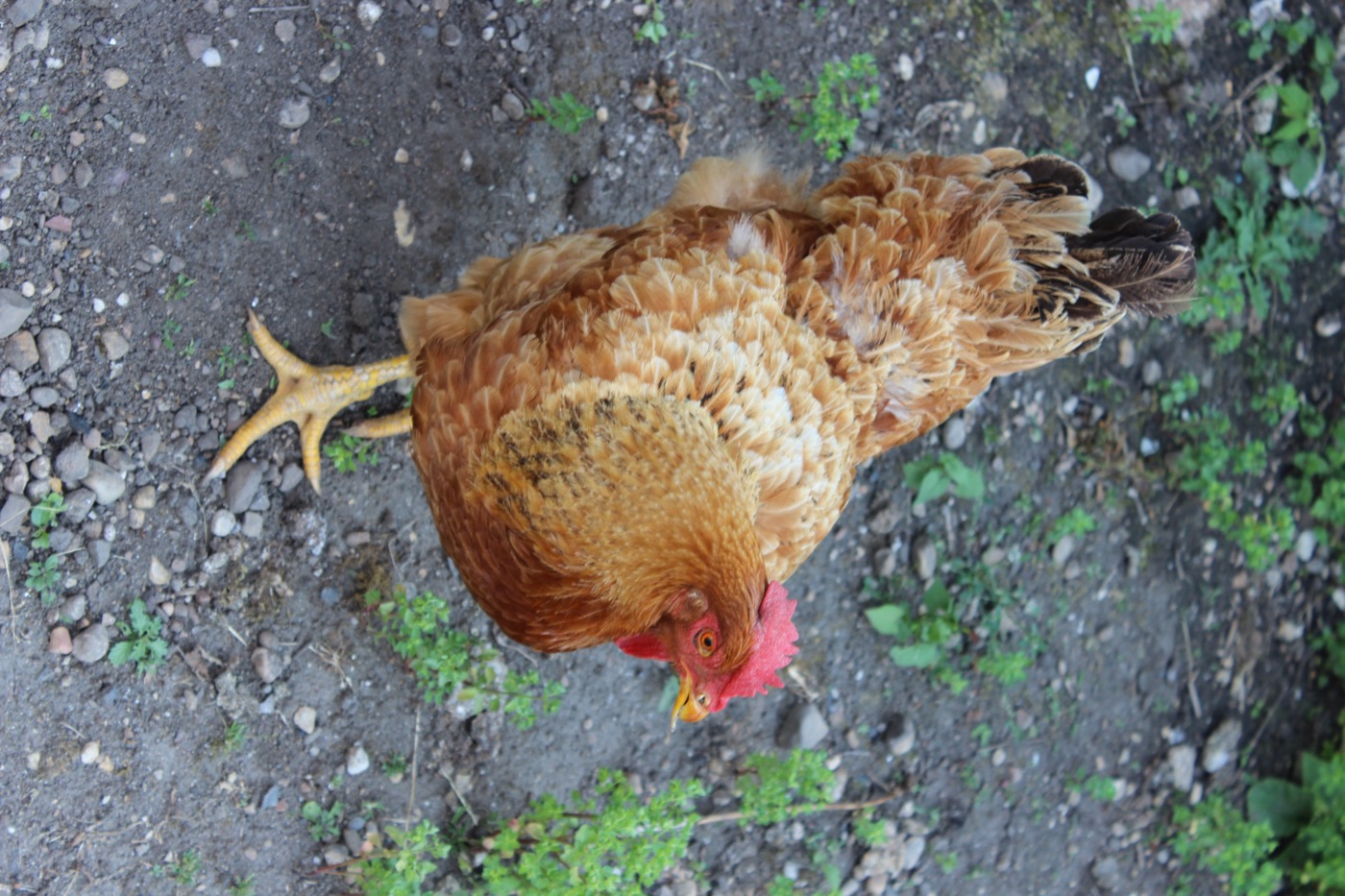
New Hampshire hens are medium to large birds, typically weighing 2.5–3 kg at maturity, with roosters reaching 3.5–4 kg. The body is broad, deep-chested, and compact — the dual-purpose build that gives them useful table value at the end of their productive life alongside their laying ability. The plumage is a warm russet-orange to chestnut red, distinctly brighter and less saturated than the Rhode Island Red's characteristic dark mahogany. Some individuals show lighter buff-coloured tips at the tail and wing ends, which increases with age. The comb, wattles, and earlobes are red and medium in size.
The overall impression is of a robust, well-built bird with good posture and a solid, healthy appearance. New Hampshires grow relatively quickly and feather out faster than many dual-purpose breeds, which means they are less vulnerable to cold stress during the growing phase than slower-developing breeds. This early feathering is related to the same rapid maturation that produces earlier laying — both are consequences of the selection for faster development that defined the breed from its inception.
Temperament and flock compatibility
The New Hampshire has a noticeably more balanced and even-keeled temperament than the Rhode Island Red. Rhode Island Reds have a well-documented tendency toward social dominance — they tend to assert hierarchy strongly in mixed flocks and can be aggressive toward more timid breeds. The New Hampshire, while active and confident, shows less of this hierarchical aggression. It is easier to integrate into a mixed flock and causes fewer problems with feather pecking and bullying when kept alongside calmer breeds like the Sussex or Plymouth Rock.
This temperament advantage makes the New Hampshire a particularly good choice for keepers who want a productive pure breed in a mixed coop without the management challenges that come with the Rhode Island Red's assertive social behaviour. It is active enough to be an effective forager in a good outdoor space, alert and engaged without being nervous or flighty, and generally compatible with human interaction without being as docile as an Orpington. For experienced beginners who want to graduate from a commercial hybrid to a pure breed without sacrificing too much management simplicity, the New Hampshire is an excellent step.
Climate adaptability and who should choose it
The New Hampshire's breeding history in the cold, wet winters of New England has produced a breed with excellent cold tolerance and good adaptability to variable climates. It handles the cold and rain of northern Spain's Atlantic coast and mountain regions well, maintaining more consistent winter production than many breeds that were not specifically selected for cold-weather performance. Its plumage density is adequate for the cold without being excessive, and its medium comb has less frost sensitivity than the large combs of the Leghorn or some other pure-breed layers.
The New Hampshire is the right choice for keepers in continental or northern Spanish climates who want a pure breed that balances production, hardiness, and temperament better than either the Rhode Island Red or the commercial hybrids. It suits those who are ready to move beyond commercial hybrids and want the satisfaction of keeping a recognised breed with real productive merit, without the management complexity of the most dominant or nervous pure breeds. It also makes an excellent dual-purpose option for smallholders who value the ability to raise both laying hens and table birds from the same breed stock, simplifying flock management considerably.
Key tips for keeping New Hampshire chickens
- Take advantage of earlier maturation by timing pullet purchases so birds begin laying before the onset of shorter autumn days — you gain extra eggs compared to later-maturing breeds on the same timeline.
- The New Hampshire is more adaptable to cold than the Rhode Island Red but still benefits from a dry, well-ventilated coop — damp cold is more damaging than dry cold for any breed.
- In mixed flocks, the New Hampshire is more compatible with calm breeds (Sussex, Plymouth Rock, Orpington) than the more dominant Rhode Island Red — match the flock composition accordingly.
- Provide adequate outdoor space for foraging; the breed was developed in environments with access to pasture and performs noticeably better with the natural dietary supplement that foraging provides.
- Winter production is a genuine strength — avoid supplemental lighting changes during the shortest months and observe how the breed maintains output naturally compared to more sensitive breeds.
- At the end of the productive life, New Hampshire cockerels and spent hens make a worthwhile table bird — plan for dual-purpose use from the start if this is relevant to your setup.