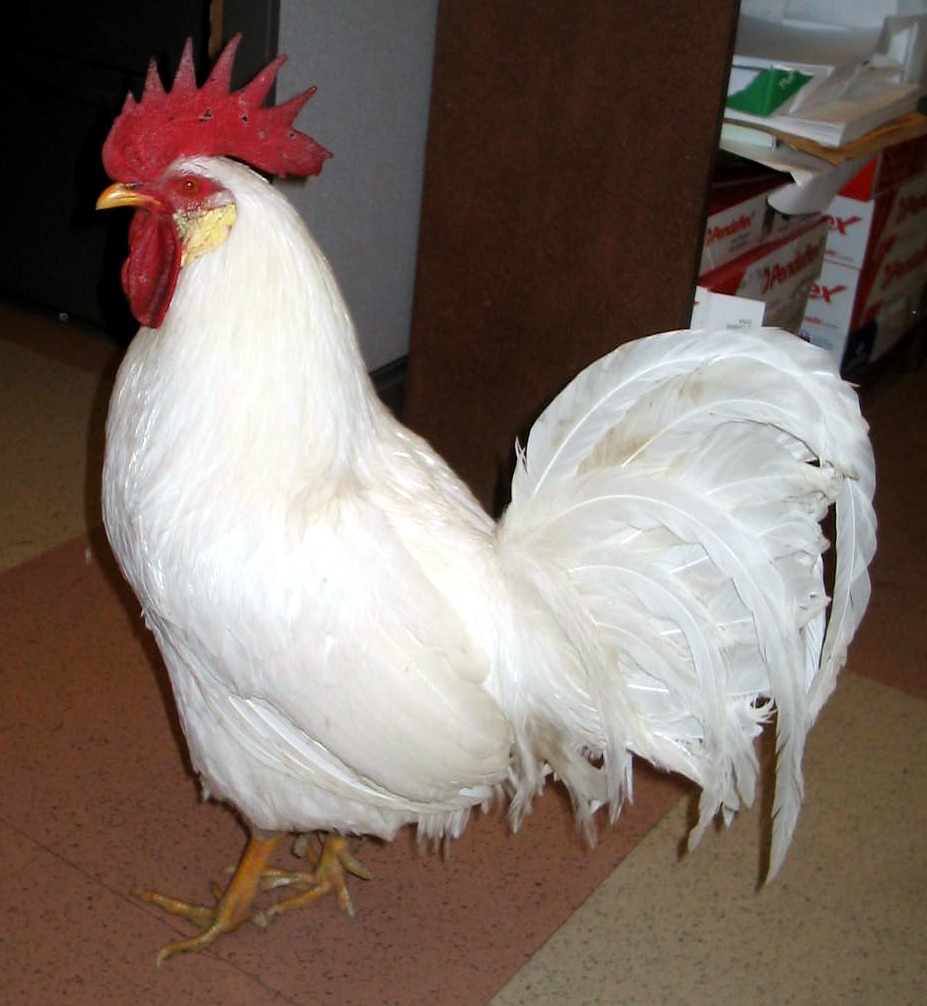
White Leghorn: the breed that produces the most white eggs in the world
Italian origin and American transformation
The Leghorn takes its name from Livorno, the Tuscan port city known in English as Leghorn, from which the first birds were exported to the United States in the 1830s. The chickens that arrived in America were already capable layers, but American breeders spent the following decades selectively refining the breed with a specific objective: maximum egg production relative to body weight and feed consumption. Through intensive selection, the American White Leghorn became the most efficient egg-producing breed the world had ever seen — an achievement reflected in the fact that the vast majority of white eggs sold in European supermarkets today come from Leghorn hens or from commercial hybrids that have Leghorn genetics as their foundation.
The breed was brought back to Europe in improved form during the late 19th century and has been a staple of commercial egg production ever since. The White Leghorn variety is by far the most common, though the breed exists in several other colours including brown, buff, black, and mottled. Commercial Leghorn strains used in modern egg production have been further developed through closed breeding programmes that have pushed production numbers well beyond what the original breed could achieve, while the traditional pure-bred White Leghorn remains available from specialist breeders for those interested in maintaining the heritage breed rather than its commercial derivatives.
Production: the feed efficiency champion
The White Leghorn produces between 280 and 300 white eggs per year in good management conditions. What makes this figure especially impressive is not the absolute number — commercial brown-egg hybrids can match or exceed it — but rather the feed efficiency with which it is achieved. The Leghorn's light body weight of 1.5–2 kg means it requires substantially less feed simply to maintain its body condition. The result is a better ratio of eggs produced to feed consumed than any other commonly kept breed. For any keeper or producer where feed cost is a significant concern, this efficiency represents real economic value over the course of a full laying year.
Egg size falls in the 55–65 gram range, typically classified as medium to large. The shells are white and generally of good quality. White eggs are sometimes perceived by consumers as less "natural" or premium than brown eggs, which is why direct-sale backyard producers who want to maximise per-egg income often choose brown-egg breeds instead. In terms of nutritional content and internal quality, white and brown eggs are identical when produced under the same conditions — the colour difference is entirely in the genetics of shell pigmentation and has no bearing on flavour, protein content, or yolk colour.
The distinctive comb and heat tolerance
The most visually striking feature of the White Leghorn is its large, floppy single comb. In adult hens, the comb grows so large that it falls to one side, giving the bird a distinctive and somewhat comical appearance. This enormous comb is not merely ornamental — it functions as a heat radiator. Blood circulating through the highly vascularised comb tissue loses heat to the air, helping the bird regulate its core body temperature in warm conditions. This physiological advantage means the Leghorn tolerates heat significantly better than breeds with smaller combs, and it performs well in the hot, dry summers of southern Spain and other Mediterranean climates where many other breeds struggle.
The same large comb that aids in heat dissipation becomes a liability in cold, frosty conditions. Exposed comb tissue can freeze in temperatures below −5°C, causing frostbite that is painful and can permanently damage the comb. In the cold, wet winters of northern Spain — Galicia, Asturias, the Basque Country, mountain regions — the Leghorn's large comb is a genuine welfare and management concern. Breeds with small rose or pea combs (Wyandotte, Plymouth Rock) are better suited to these environments. In central and southern Spain, the Leghorn's comb is rarely a problem; in the north, it is a reason to choose a different breed.
Temperament: active, alert, and not for everyone
The Leghorn is the most nervous and active of the commonly kept laying breeds, and this characteristic is well-established enough to be something prospective keepers should genuinely factor into their decision. Leghorns do not like to be caught, handled, or restrained. They are alert to sudden movements and unfamiliar stimuli, and they respond by running, flying, or vocalising loudly. For keepers who want to interact regularly with their birds, observe them closely, or allow children to handle them, this temperament can be genuinely frustrating. A Leghorn will rarely voluntarily approach a human the way a Sussex or Orpington will.
In terms of flock management, the Leghorn's activity level means it needs adequate space to express natural behaviours without becoming stressed. In a confined, small run, Leghorns can develop feather pecking behaviours faster than calmer breeds. Their ability to fly — far better than heavy dual-purpose breeds — means that fencing must be higher or clipped wings are needed to prevent escape. In a properly sized free-range setup, these characteristics are less problematic; the breed's natural alertness and foraging drive make it an effective and interesting free-range bird. In a small urban coop with a restricted run, it is among the least suitable choices.
Best uses and who should choose it
The White Leghorn is the right choice for those who prioritise maximum white egg production, have adequate space for an active breed, are prepared for birds that do not enjoy being handled, and live in a climate that does not present serious frost risk. It is particularly well-suited to hot southern Spanish climates where its heat tolerance gives it a genuine advantage over less adapted breeds. It works well in larger free-range setups where its foraging ability and active nature find appropriate expression.
It is not the right choice for a first chicken-keeping experience, for families with young children who want to handle and interact with the birds, for small enclosed coops where activity levels become a problem, or for northern regions with frosty winters. The Leghorn is a specialist producer's breed — exceptional at what it was designed to do, but demanding in terms of space and temperament management. For most domestic backyard keepers in Spain whose primary concern is manageable, reasonably productive birds that work well in a mixed family setting, a dual-purpose breed or a calmer hybrid will be a more satisfying daily experience.
Key tips for keeping White Leghorns
- Provide at least 4–5 m² of outdoor run per bird, or free-range access — this is an active breed that deteriorates noticeably in confined conditions.
- Use higher fencing (1.8 m minimum) or clip one wing to prevent escape — Leghorns are among the best flyers of the common laying breeds.
- In hot summers, the large comb is an asset — ensure fresh water is available at all times and the coop position allows for good airflow rather than shading the comb from air circulation.
- In any region with regular frost risk, apply a thin layer of petroleum jelly to the comb on the coldest nights to prevent frostbite damage.
- Do not expect hands-on interaction — handle young birds regularly to habituate them, but accept that this breed will always be more watchful and flight-prone than calmer alternatives.
- The feed efficiency advantage is real: track feed consumption against eggs produced and compare with any previous brown-egg hybrid to see the Leghorn's economic advantage in action.