Isa Brown: everything you need to know about the most popular laying hen in Spain
What the Isa Brown is and where it comes from
The Isa Brown is not a breed in the traditional sense. It is a first-generation commercial hybrid (designated F1) developed in France by the Institut de Sélection Animale (hence ISA) in the 1970s. It is the result of crossing two highly selected parent lines — one male, one female — each of which has been refined over many decades to express maximum egg production when combined. Neither parent line is commercially available, and the Isa Brown chicks that hatch from this cross do not reproduce reliably in the same way they were created. This is a deliberate feature of commercial hybrid genetics: it ensures that poultry farmers must return to the breeding company for each new flock rather than breeding replacement birds themselves.
The ISA company is now part of Hendrix Genetics, a Dutch corporation that is one of the global leaders in poultry genetics. The Isa Brown name is one of the most recognisable in European poultry farming and is synonymous for most Spanish keepers with the concept of a reliable, high-producing domestic laying hen. It dominates the backyard poultry market in Spain not because it is necessarily the best hybrid in every situation, but because it was introduced early, became familiar, and its temperament and performance in managed coops make it a consistently safe choice for beginners and experienced keepers alike.
Real production: what to expect
Under good management conditions, an Isa Brown hen will produce between 300 and 320 eggs in her first laying year. Laying typically begins at 18 to 20 weeks of age, ramping up quickly to peak production within the first month. Eggs are medium brown, consistently weighing 60–65 grams. The first few weeks of laying often produce smaller eggs that gradually increase in size as the hen's system matures — this is normal for all laying breeds and not a sign of inadequate management.
Production in the second year declines, typically falling to 60–80% of first-year levels. Some keepers replace their flock annually to maintain peak output; others allow hens to continue into a second year and accept the lower but still useful production. Whether renewal makes economic sense depends on the cost of replacement birds and feed relative to the value of the eggs produced. For most domestic keepers, the second-year flock still produces enough eggs to justify its feed cost, and the birds themselves are settled into routines that makes management easier than with newly introduced pullets.
Appearance, character, and handling
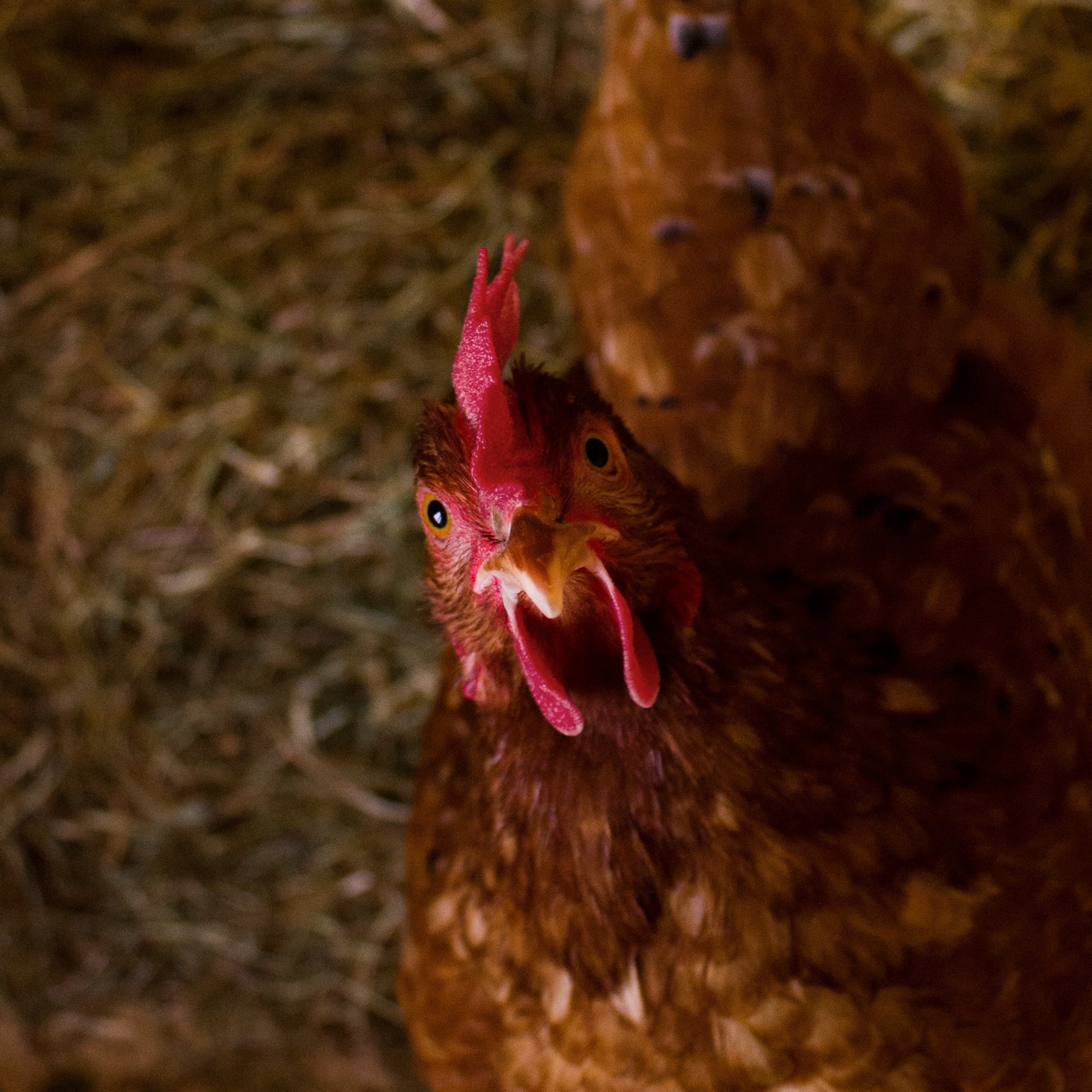
The Isa Brown is a medium-sized hen, typically weighing 1.8–2.2 kg at laying age. Its plumage is a warm reddish-brown on most of the body, with creamy white tips on the tail and wings that become more visible as the bird matures. The comb is a medium single comb, upright in young hens. The overall appearance is neat and uniform — not showy, but attractive in a practical, farmyard way.
Temperament is one of the Isa Brown's most consistently praised qualities. It is the calmest of the major commercial hybrids, least likely to panic when routines change, and most tolerant of handling. Isa Browns kept by families with young children are typically comfortable with regular interaction within the first few weeks and become familiar with individual people very quickly. They do not particularly seek out human contact in the way that an Orpington or Sussex might, but they tolerate it well and do not flee or show distress during health checks, medication administration, or coop management. This combination of production and manageability makes the Isa Brown the default recommendation for almost any new keeper.
Feeding, care, and limitations
The Isa Brown has no unusual dietary requirements beyond those of any laying hen. A quality layer pellet containing 16–18% protein, offered ad libitum, provides the nutritional foundation. Supplement with oyster shell or crushed clean eggshell in a separate feeder to ensure adequate calcium for strong shells throughout the laying cycle. Fresh water must be available at all times — a laying hen drinks approximately 250–300 ml of water daily and restricting access for even a few hours on a hot day can cause a measurable drop in egg production that takes days to recover from.
The main limitation of the Isa Brown relative to pure breeds is its heat sensitivity. In sustained high temperatures above 30°C — common in southern Spain during July and August — Isa Browns reduce laying more sharply than some other hybrids and can stop laying entirely during extreme heat events. Good coop positioning for shade and ventilation, clean cool water constantly available, and avoiding any additional management stress during hot periods are the key management actions. If your setup is in a consistently hot region, the Shaver Brown or Lohmann Brown may maintain better summer production. For most of Spain, however, appropriate shade and water management is sufficient to keep the Isa Brown productive through the summer.
Is the Isa Brown still the right choice in 2026?
The Isa Brown remains the most sensible starting point for the vast majority of domestic chicken keepers. It is available at virtually every hatchery and poultry distributor in Spain at a fair price, it is forgiving of beginner management mistakes, its temperament makes learning to keep chickens a pleasant experience rather than a stressful one, and its production figures are genuinely impressive for a backyard flock. These qualities have not changed since the breed was developed, and they continue to make it the default choice that experienced keepers recommend to beginners.
Where the Isa Brown falls short is in situations that require specific characteristics it was not designed for: self-sufficiency and foraging in a genuine free-range environment, resilience in harsh climates without careful management, production persistence into a third year, or the visual distinctiveness that coloured eggs or unusual plumage can provide. For those specific needs, a pure breed like the Rhode Island Red or Sussex, or a different hybrid like the Shaver Brown, may serve better. For the majority of domestic keepers who want manageable, productive, health-robust hens in a properly set-up coop, the Isa Brown is still the benchmark against which other choices are measured.
Key tips for keeping Isa Brown hens
- Provide shade and cool, fresh water at all times during summer — the Isa Brown is more heat-sensitive than some hybrids and production drops sharply when hens cannot regulate their body temperature.
- Layer pellets should be available ad libitum rather than rationed — restricting feed even briefly can cause production drops that take several days to recover from.
- Offer oyster shell in a separate feeder rather than mixed into feed so each hen can self-regulate her calcium intake based on her laying cycle.
- Handle chicks and young pullets regularly from the start — the breed's naturally calm temperament rewards early habituation with birds that are easy to manage throughout their lives.
- If planning to keep hens into a second year, track production weekly by flock average so you can identify any significant decline that might indicate a health issue rather than normal seasonal reduction.
- Do not keep Isa Browns with aggressive or dominant breeds like Rhode Island Red roosters in small coops — the hybrid's calm temperament can leave it vulnerable to bullying in poorly managed mixed flocks.