Easter Egger: the chicken that can lay eggs of any color
What Easter Eggers actually are
The term "Easter Egger" does not describe a recognised breed. No poultry association — not the American Poultry Association, the Poultry Club of Great Britain, or any equivalent body in Spain or Europe — recognises Easter Eggers as a standardised breed with a defined type. What the name describes, instead, is any chicken that carries at least one copy of the oocyan gene (the gene responsible for blue eggshells, inherited ultimately from the Araucana) but does not conform to the specific appearance and production standards of the official breeds that carry this gene, namely the Ameraucana or the Cream Legbar.
In practical terms, Easter Eggers are hybrids — usually crosses between Araucana or Ameraucana genetics and one or more other breeds. The gene combinations vary widely from flock to flock and even from bird to bird within the same flock. This genetic variability is precisely what makes Easter Eggers interesting: each bird is genetically unique in how it combines the blue egg gene with whatever other pigment genes it carries, and this determines both the appearance of the bird and the colour of the egg it lays. The lack of a fixed breed standard means there is no "wrong" Easter Egger — but it also means there are no guarantees about appearance, production, or egg colour.
The science behind the colour variety
A chicken's eggshell colour is determined by the interaction of two types of pigment. The first is biliverdin, deposited throughout the shell by the oocyan gene, which creates a blue base colour that penetrates the entire shell from inside to outside. The second is protoporphyrin, a reddish-brown pigment applied as a surface coating during the final stages of shell formation, which is controlled by a different set of genes and produces brown or cream colouring in breeds that carry it.
An Easter Egger that carries only the oocyan gene and no brown pigment genes will lay a pure blue egg. One that carries oocyan plus a moderate amount of brown pigment genes will lay a green egg — blue base, brown overlay. One that carries oocyan plus a high concentration of brown pigment genes will lay an olive green or even dark greenish-brown egg. An Easter Egger that carries very little oocyan expression but has cream-coloured surface pigment may lay a pale pinkish or cream egg. The exact colour depends on the specific genetic lottery of that individual bird, and because the genetics are not fixed to a standard, you genuinely cannot predict the outcome until the bird lays her first egg.
Production rates and practical performance
Because Easter Eggers are hybrids rather than pure breeds under intensive selection for a single trait, their production figures vary considerably. Most Easter Eggers lay between 200 and 280 eggs per year, with the exact number depending on the specific genetics of the bird, the quality of its management, and the breeds that contributed to its parentage. Easter Eggers with a high proportion of Ameraucana genetics tend to be at the lower end of this range; those with more contribution from high-production breeds like the Leghorn or a commercial hybrid may produce considerably more.
In general, Easter Eggers are more productive than pure Araucana or purebred Ameraucana hens, and their production consistency is often reasonable without requiring the intensive management that peak-production commercial hybrids need. They are commonly described by keepers as hardy, adaptable birds that perform well across a range of conditions without specialised care. This makes them a good entry point for new keepers who want coloured eggs without committing to the more demanding management of a specialist pure breed.
Temperament and appearance diversity
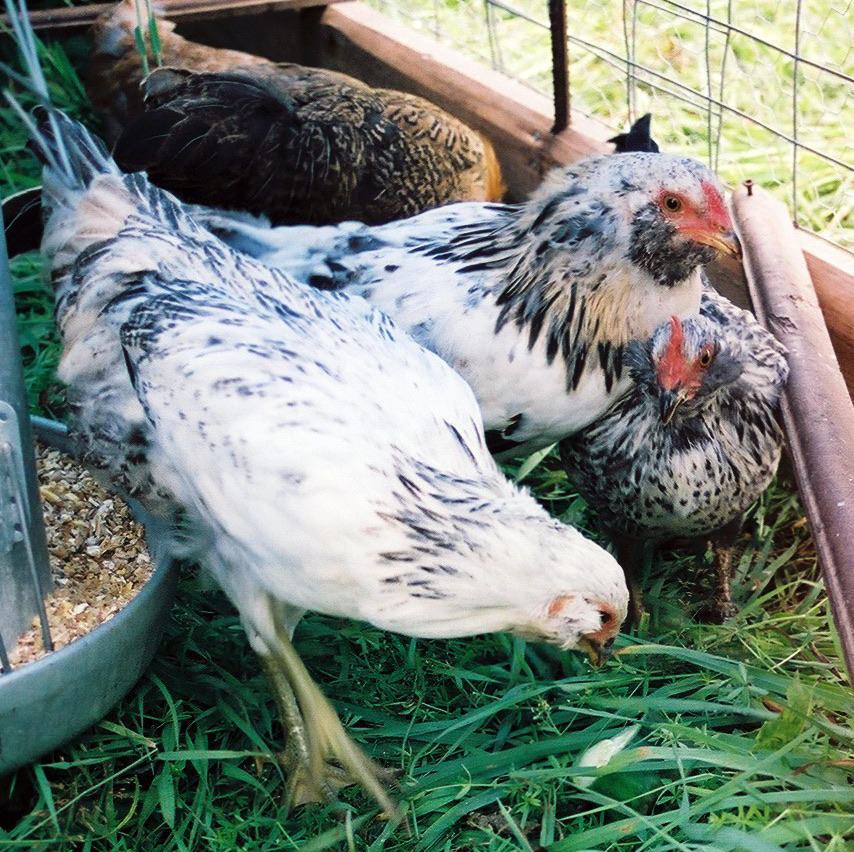
Just as egg colour varies between individual Easter Eggers, so does appearance. Body size, feather colour, comb type, and even the presence or absence of a beard or muffs all vary because these traits are not fixed by a breed standard. Some Easter Eggers look almost indistinguishable from Ameraucanas and have muffs and beards; others are plain-faced with single combs and no distinguishing features at all. This visual diversity is part of the charm for those who enjoy a flock of genuinely individual birds, though it can make identification and breed discussion confusing.
Temperament is similarly variable, though most Easter Eggers are described as moderately calm and sociable. They tend to be calmer than Leghorns but more active than Orpingtons. They generally integrate well into mixed flocks and do not tend toward excessive aggression or dominance behaviour. As with any mixed-genetics bird, individual variation can be significant — so if temperament is a priority, handling your specific birds from an early age is more important than any breed generalisation.
Easter Eggers versus Ameraucanas: which to choose
The choice between Easter Eggers and purebred Ameraucanas comes down to what you value most. Easter Eggers are significantly cheaper — typically 5–10 euros per bird versus 15–30 euros or more for a genuine purebred Ameraucana. They are also much easier to find at hatcheries and poultry markets throughout Spain. The trade-off is that you cannot predict the exact egg colour each bird will produce, the appearance of the birds is variable, and there is no breed standard to maintain or show against.
For most backyard keepers whose primary goal is a basket of varied, colourful eggs at a reasonable cost, Easter Eggers are the obvious starting point. For those interested in maintaining a recognised breed, participating in shows, or breeding birds that reliably produce consistent results, the Ameraucana or Cream Legbar are the more appropriate choice. The two paths are not mutually exclusive — many keepers begin with Easter Eggers and later add genuine Ameraucanas once they have experience with the coloured egg trait and understand what they are looking for.
Key tips for keeping Easter Eggers
- The egg colour of each individual bird is fixed once she lays her first egg — take note of each hen's colour on first laying so you know which bird produces which shade.
- Do not be frustrated if some birds lay green, cream, or even brown rather than the hoped-for blue — the colour lottery is part of the Easter Egger experience and not a management failure.
- Sellers who guarantee a specific egg colour from Easter Eggers are overpromising — be sceptical of any claim that all birds will lay blue eggs specifically.
- Pair Easter Eggers with dark-shelled breeds like Marans or Penedesenca for a genuinely striking egg basket with maximum colour contrast.
- Production quality varies between birds more than in a standardised hybrid — keep records of each hen's output to identify any consistent underperformers.
- Treat as you would any medium-production laying bird: balanced layer feed, calcium supplement, clean water, and adequate outdoor space for a healthy and productive flock.