Cream Legbar: the self-sexing breed that lays blue eggs
Created at Cambridge: the genetics behind autosexing
The Cream Legbar was developed at the University of Cambridge in the 1930s by two geneticists, Reginald Crundall Punnett and Michael Pease. Their goal was to create a breed in which the sex of chicks could be determined visually at hatching — without the need for manual vent sexing, which is a difficult skill that requires months of practice and still carries error rates even in experienced hands. The solution they found was to combine the autosomal barring gene with sex-linked gold and silver dilution genes, producing a breed in which males and females are visually distinct from the moment they hatch.
The breed was created by crossing Barred Plymouth Rocks with Brown Leghorns, and later incorporating the Araucana blue egg gene into the line. The Leghorn heritage gave the breed its light body type and reasonably high production numbers. The Araucana contribution introduced the oocyan gene responsible for the blue shell colour. The result is a breed that combines three commercially valuable traits in a single genetic package: blue eggs, sex-linked colour identification at hatching, and respectable egg production. It was recognised by the Poultry Club of Great Britain and remains one of the most genetically interesting utility breeds ever developed in Britain.
What autosexing means in practice
In newly hatched Cream Legbar chicks, the sex is visible to the naked eye without any specialised knowledge. Female chicks are darker overall and have a distinctive dark stripe running down their backs. Male chicks are paler, have a yellow or cream head spot that is typically round and clearly defined, and lack the strong back stripe of the females. The difference is pronounced enough that any keeper can learn to distinguish the sexes within minutes of seeing the first hatch — a significant advantage in any breeding programme or backyard flock where unwanted roosters are a concern.
This autosexing trait is particularly valuable in urban and suburban settings where cockerels are not permitted. Rather than ordering unsexed chicks and dealing with the males when they become apparent at six to eight weeks, Cream Legbar breeders can identify and manage sexes from day one. For small-scale breeders selling eggs for hatching, the ability to advertise autosexing chicks adds considerable commercial value. It also means that if you are raising chicks for replacement hens, you can set aside the females from hatch without any guesswork or waiting.
The crest and distinctive appearance
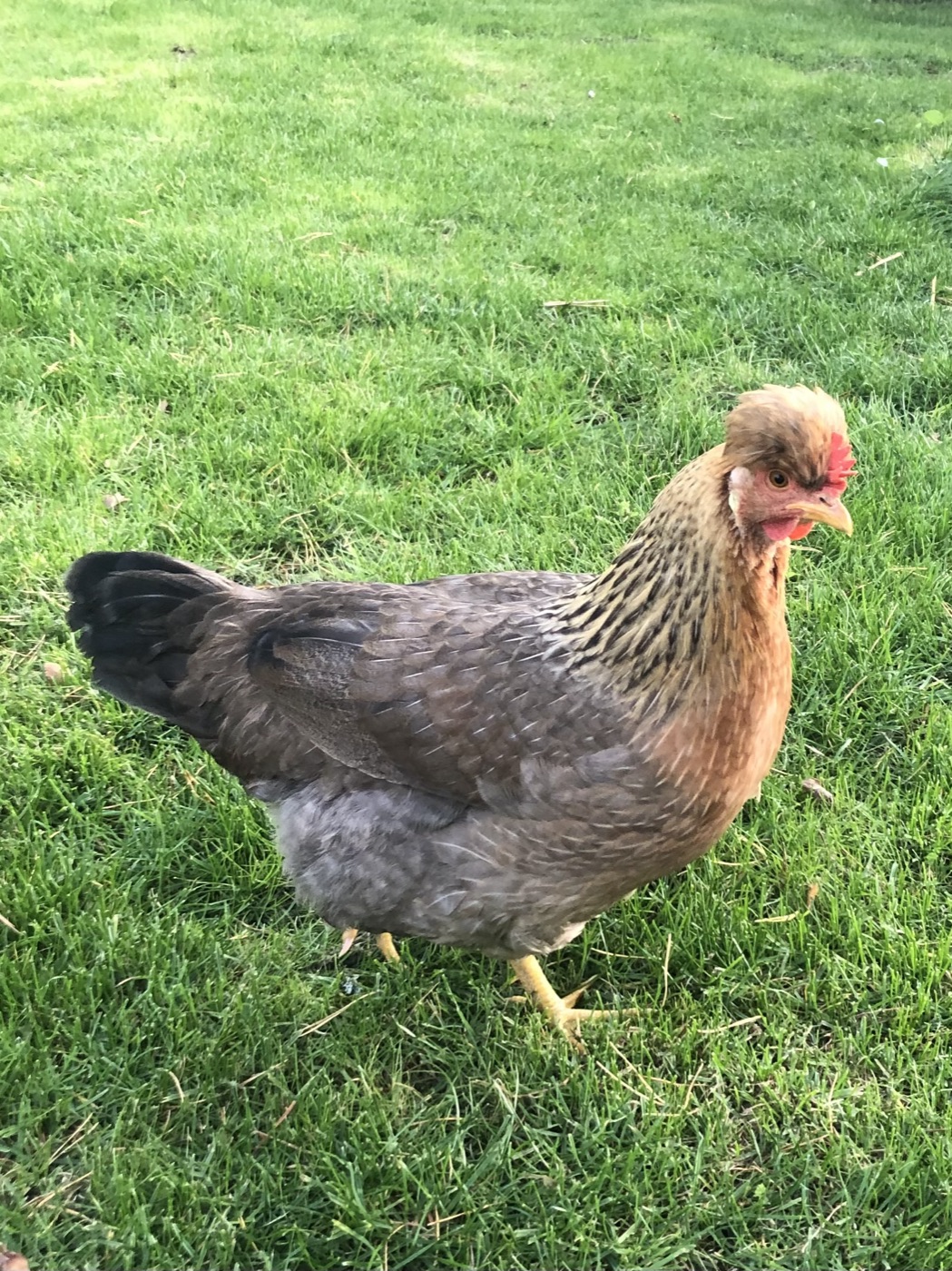
One of the most visually distinctive features of the Cream Legbar is its crest — a small tuft of feathers growing from the back of the skull in addition to the upright single comb inherited from the Leghorn parent. This combination of comb and crest is unusual and immediately recognisable. The plumage is a soft cream-grey with barred patterning, creating a subtle but attractive visual effect that sets the breed apart from the white or brown birds that dominate most commercial coops.
The body type follows the Leghorn ancestry: relatively light, active, and alert. Hens weigh around 2–2.5 kg and carry themselves with the typical upright posture of a Mediterranean-type breed. The comb is single and medium-sized, which falls to one side in adult hens — a characteristic inherited from the Leghorn parent. The combination of crest, barred plumage, and drooping comb creates an appearance that is both charming and distinctive, making the Cream Legbar a popular choice for those who value the visual variety of their flock as well as its productive qualities.
Production and egg colour
Under good management conditions, the Cream Legbar lays between 200 and 230 eggs per year. This places it below the output of commercial hybrids but comfortably above most pure ornamental breeds. Laying typically begins at around 20 to 22 weeks of age. The eggs are a pale to medium sky blue, trending towards blue-green in some individuals. The shade is generally lighter than Araucana eggs but comparable to Ameraucana eggs, and both the colour and the combination with autosexing make these eggs particularly attractive for speciality markets.
The sky-blue eggs from Cream Legbars are among the most photographed and discussed in small-scale poultry circles, and the breed has developed a strong following in the UK, the US, and increasingly in other European countries including Spain. Finding genuine purebred Cream Legbars in Spain is more challenging than in Britain, where the breed has a longer established history, but specialist breeders do exist and the breed's availability has improved as interest in coloured eggs and self-sexing breeds has grown among domestic keepers.
Temperament and management considerations
The Cream Legbar is an active, alert, and somewhat nervous breed — a direct reflection of its Leghorn heritage. It is not a breed that will willingly sit in a keeper's lap or tolerate excessive handling. It tends to be wary of approach and quick to move away when startled. These characteristics are not a problem in practice but do mean that the breed is better suited to keepers who appreciate observing their birds from a short distance rather than those who want frequent hands-on interaction. It is not the first breed to recommend for young children.
In terms of space requirements, the Cream Legbar needs adequate room to move and express its natural activity levels. Confined in a small, fixed run without enrichment, it can become stressed and may develop feather pecking. A good-sized outdoor area with access to scratch and forage, combined with a dry and well-ventilated coop, suits this breed well. The pea comb inherited from the Araucana contribution, combined with the smaller single comb from the Leghorn side, gives the breed reasonable cold tolerance. In typical Spanish winters across most of the country, the Cream Legbar does not require special protection.
Key tips for keeping Cream Legbar chickens
- Learn to identify the sex-linked colour differences at hatching before your first chicks arrive — practice images are widely available online and the difference is easy to learn.
- Provide generous outdoor space: the Leghorn heritage means this breed needs room to move and becomes stressed in tight confinement.
- Blue egg colour intensity can vary between individuals — do not expect all your Cream Legbar hens to lay the same shade, as genetics within a single flock can vary.
- Finding genuine purebred Cream Legbars in Spain requires research — verify that sellers can demonstrate the autosexing trait works correctly before paying a premium price.
- This is not an ideal breed for regular hands-on handling; focus on enriching the outdoor environment to keep active birds occupied and stress-free.
- Use the autosexing advantage: separate males at hatch to avoid the stress and management complications of unexpected cockerels in the flock.