How to choose the perfect chicken breed for your garden or plot
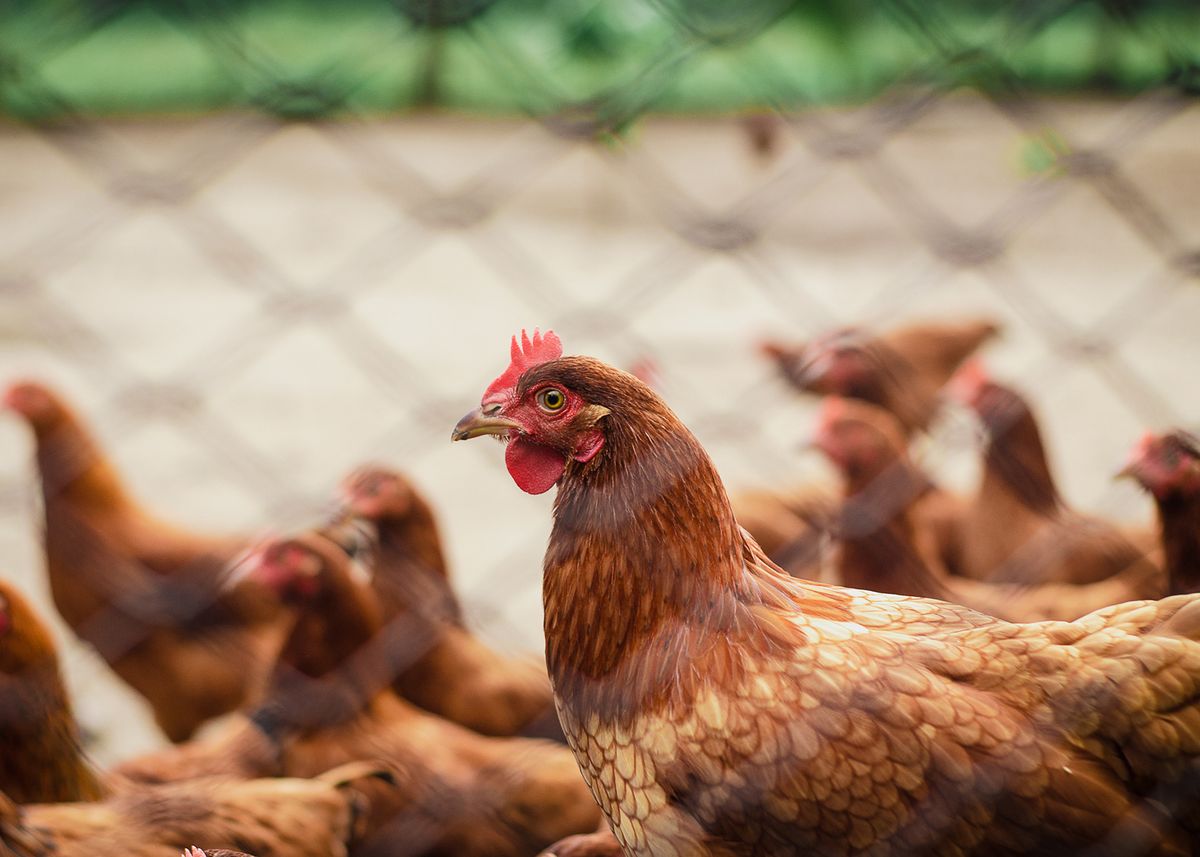
First, define what you actually want from your chickens
Before you look at a single breed, you need to answer one honest question: what do you want from keeping chickens? The answer sounds obvious, but it changes every recommendation that follows. If your goal is a reliable daily supply of eggs for a family of four, you should be looking at high-production hybrids or proven dual-purpose pure breeds. If you want chickens your children can interact with, temperament matters as much as egg count. If you are interested in local markets or in selling eggs as a premium product, the colour and visual distinctiveness of the eggs become part of the equation. And if you simply enjoy the animals themselves and eggs are a secondary benefit, you have the widest choice of all.
Honest answers to this question save money and frustration. Many beginners buy a mixed flock of interesting-looking breeds without thinking through the practical consequences — and then find that some birds are too nervous to handle, others produce far fewer eggs than expected, and the flock as a whole is harder to manage than anticipated. Starting with a clear goal means starting with a breed that fits that goal, rather than hoping a random selection will work out.
Pure layers versus dual-purpose breeds
Pure laying breeds — the White Leghorn, Isa Brown, Lohmann Brown, and similar commercial hybrids — are optimised for one thing above all others: converting feed into eggs as efficiently as possible. In good conditions they produce 280 to 320 eggs per year per hen, which is extraordinary by any historical standard. Their bodies are light, their feed consumption is relatively low per egg produced, and they do not waste energy developing a large carcass. The trade-off is that they are often nervous, can be difficult to handle, and are generally less robust and self-sufficient than traditional breeds. They are excellent if your priority is maximum egg output in a managed coop; they are less suited to free-range environments where foraging ability and weather resilience matter.
Dual-purpose breeds — Sussex, Plymouth Rock, Rhode Island Red, New Hampshire, Wyandotte — offer a different balance. They produce fewer eggs per year, typically 200 to 250, but they are calmer, more resilient, better at foraging, and easier to handle. Their larger body size also means that at the end of their productive life, the bird has some value as a table chicken. For most domestic keepers whose primary interest is in the experience of keeping chickens rather than in maximising egg output, a dual-purpose breed is often the more satisfying long-term choice. The production difference sounds large in theory but translates to roughly two fewer eggs per week per hen — a difference that most families would barely notice.
How space shapes your breed decision
The minimum space requirements for chickens are not negotiable: 1 m² of enclosed sleeping area and at least 3–4 m² of outdoor run per bird. Below these thresholds, stress, feather pecking, and disease become progressively more likely regardless of which breed you choose. However, different breeds respond very differently to how much space is available beyond the minimum. Active, nervous breeds like the Leghorn or the Araucana suffer in tight conditions and become visibly stressed even at double the minimum space. Calm, compact breeds like the Orpington or the Sussex adapt much better to smaller runs and quieter coop environments.
If you have a large garden with free-range access, your breed options are very broad — but you should lean towards breeds with good foraging ability and enough common sense to avoid wandering into danger. If your setup is a fixed coop with a defined run, choose calmer breeds that will not spend the day pacing the wire out of frustration. Also consider that very active breeds are more likely to fly over low fences: Leghorns, Araucanas, and similar breeds may need clipped wings or higher fencing, while heavier dual-purpose breeds rarely bother to test the boundaries at all.
Matching the breed to your climate
Spain's climate varies enormously from north to south, and breed choice should reflect this. In the north — Galicia, Asturias, Cantabria, the Basque Country — cold, wet winters and moderate summers are the challenge. Here, cold-tolerant breeds with small or rose combs (Plymouth Rock, Wyandotte, Sussex, New Hampshire) are the sensible choice. Large simple combs freeze in severe frost and cause pain and reduced production. The Leghorn's enormous comb, while an effective heat dissipator in summer, is a liability in a cold, wet northern winter.
In the south and Mediterranean coast — Andalucía, Murcia, Valencia, the Canary Islands — summer heat is the primary constraint. Breeds that reduce laying sharply in temperatures above 30°C become frustrating to manage. The Shaver Brown and Bovans Brown both have better heat tolerance than most European hybrids. The Leghorn's large comb actually helps here: it radiates excess heat efficiently and this breed performs better in hot conditions than its nervous temperament might suggest. The key management action in hot climates is consistent shade, fresh water available at all times, and ventilated coop positioning.
Recommendations by keeper profile
For first-time keepers with no prior experience, the Sussex or Rhode Island Red are the safest starting choices. Both are calm enough to handle without stress, produce reliably year-round including in winter, tolerate a wide range of weather conditions, and are available at virtually any poultry hatchery in Spain. Three Sussex hens well-managed will produce more eggs than six nervous hybrids managed poorly. Starting with a manageable breed gives you time to develop good habits before adding complexity.
If you are specifically interested in speciality eggs for local markets or direct consumer sales, coloured-egg breeds deserve serious consideration. Easter Eggers are the most accessible entry point — affordable, productive, and capable of laying blue, green, pink, or cream eggs depending on the individual bird. For a more defined breed with a consistent blue shell, the Ameraucana is the next step. In both cases, the premium pricing that coloured eggs can command in artisan markets can meaningfully change the economics of small-scale keeping, transforming chickens from a hobby with costs into something closer to a productive garden enterprise.
Key tips for choosing a chicken breed
- Write down your primary goal before researching breeds — maximum eggs, docile temperament, coloured eggs, or ornamental value — and let that goal filter your options rather than choosing by appearance alone.
- For most beginners, starting with three to four hens of one calm breed is better than a mixed flock of six different breeds with varying needs and temperaments.
- Research the availability of your chosen breed in your region before committing — some breeds are easy to find at any hatchery while others require ordering from specialist breeders with long waiting lists.
- Climate matters: choose a small-combed breed for cold, frosty winters in the north; choose a heat-tolerant hybrid for Mediterranean summers in the south.
- Visit a local poultry keeper or farm with your chosen breed before buying — temperament on paper does not always match the reality of a specific flock or breeding line.
- Factor in the cost of flock renewal: high-production hybrids drop significantly in year two and may need replacing, while dual-purpose pure breeds produce for longer at a lower but more consistent rate.