Ameraucana: more productive than Araucana and with the same blue egg
From Araucana to Ameraucana: solving the genetic problem
The Ameraucana was developed in the United States during the 1970s with a very specific objective: to preserve the blue egg gene from the Chilean Araucana while eliminating the lethal anuro gene that caused significant embryonic mortality in purebred Araucana breeding. The gene responsible for taillessness, when inherited in double copies from both parents, is fatal to the embryo — meaning that in any pure Araucana breeding programme, some chicks simply do not survive. Poultry geneticists in the U.S. worked over several generations to isolate the oocyan gene (which colours the eggshell blue) without carrying over this genetic liability.
The result is a chicken that has a tail, avoids the lethal gene entirely, and still lays the distinctive blue eggs that made the Araucana famous. In 1984, the American Poultry Association recognised the Ameraucana as a standard breed, giving it an official status that separates it from the many blue-egg hybrids sold under similar names. This recognition matters for breeders who care about consistent type and documented lineage, and it sets the Ameraucana apart from Easter Eggers, which may carry some of the same genetics but do not conform to a defined breed standard.
Physical characteristics and recognised varieties
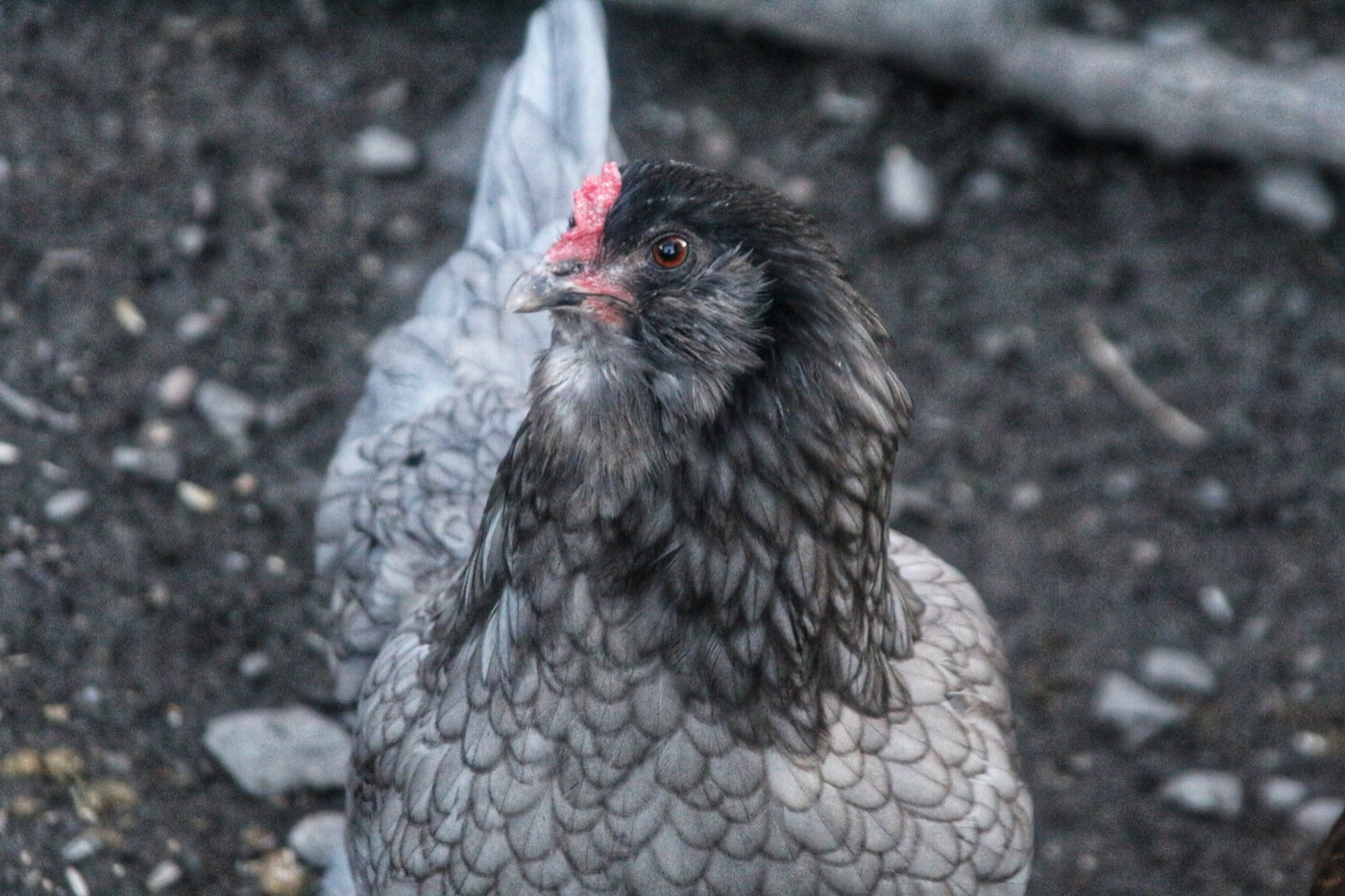
The Ameraucana is immediately recognisable by its beard and muffs — tufts of feathers that extend from the base of the beak and cheeks, giving the bird a charming, bearded appearance unlike most other breeds. Unlike the Araucana, the Ameraucana has a full tail. Its comb is a small pea comb, which sits close to the head and makes the breed more resilient to cold weather than large-combed breeds. The body is medium-sized, well-proportioned, and carries itself with an alert, curious posture.
The American Poultry Association recognises eight colour varieties of Ameraucana: black, blue, brown-red, silver, wheaten, white, lavender, and blue wheaten. Each variety has a distinct and well-defined plumage pattern. Breeders working with exhibition birds pay close attention to these standards, and the variety of available colours makes the breed visually appealing for those who want an attractive flock as well as coloured eggs. The lavender variety in particular has attracted considerable interest in recent years because of its distinctive pale blue-grey plumage.
Egg production and the blue shell
In practical backyard conditions, the Ameraucana lays between 200 and 250 eggs per year. This is a meaningful improvement over the original Araucana, which typically produces 150 to 180 eggs annually. The shells range from pale blue to a medium sky blue — the tone varies depending on the individual hen and the specific line, but it never reaches the intensely saturated turquoise blue of the pure Araucana. For most keepers and market customers, the colour is more than sufficient to attract attention and command a premium.
The blue colour in Ameraucana eggs, just like in Araucana eggs, comes from the oocyan gene, which causes biliverdin (a bile pigment) to penetrate the entire shell structure during formation. This means the blue colour goes all the way through the shell — if you crack the egg, the inside of the shell is also blue. No surface coating is involved, and the colour does not affect nutritional content. Hens generally begin laying at around 20 to 24 weeks of age, somewhat later than commercial hybrids but within the typical range for pure breeds.
Temperament and management
The Ameraucana has a calm, curious temperament that makes it manageable even for inexperienced keepers. It is considerably more docile than the Araucana, which tends to be independent and somewhat wary of human contact. Ameraucanas generally adapt well to being handled and to the routines of a domestic coop. They are sociable within a mixed flock and do not tend to be particularly aggressive or dominant, which makes them a good addition alongside other breeds of similar temperament.
In terms of coop management, the Ameraucana has no requirements that differ greatly from other medium-sized laying breeds. It benefits from a well-ventilated coop with adequate perching space, access to a run where it can scratch and forage, and a balanced layer feed supplemented with oyster shell. The small pea comb means frost damage is rarely a concern, which makes this breed suitable for keepers in areas with cold winters. In summer, shade and fresh water are more important than breed-specific precautions.
Finding pure Ameraucanas and avoiding confusion
One of the most common frustrations for buyers interested in Ameraucanas is the confusion surrounding terminology. Many hatcheries and sellers use the name "Ameraucana" loosely to refer to Easter Eggers — birds that carry some blue-egg genetics but do not meet the breed standard. True Ameraucanas bred to the APA standard are considerably harder to find, particularly in Spain and Europe, where the breed is less established than in North America. Buyers should look for breeders affiliated with recognised poultry associations and request documentation of the lineage before purchasing.
The price difference between a genuine Ameraucana and an Easter Egger sold as one can be significant. A purebred Ameraucana pullet ready to lay may cost two to three times more than a generic blue-egg hybrid. For most backyard keepers whose main interest is in the coloured eggs and manageable temperament, an Easter Egger is a perfectly valid alternative. For those interested in breeding, showing, or maintaining a true breed, however, the effort of locating genuine Ameraucanas is worthwhile.
Key tips for keeping Ameraucana chickens
- Verify that the birds you are buying conform to the APA breed standard before paying a premium for "Ameraucanas" — many sellers use the name loosely for Easter Eggers.
- The pea comb makes this breed more cold-tolerant than large-combed breeds, so it is a solid choice for northern regions with frosty winters.
- Offer oyster shell in a separate feeder alongside layer pellets to support consistent eggshell quality and a good blue colour intensity.
- Introduce Ameraucanas to a mixed flock during the visual-only introduction period (two weeks through wire) to minimise stress for all birds.
- Egg colour tone varies between individual hens — do not expect all birds from the same breeder to lay the same shade of blue.
- Start handling chicks early and regularly to take full advantage of this breed's naturally calm and curious temperament.